Despite being legally protected for the past decade, the numbers of free-ranging Peninsula Chacma baboons have remained relatively unchanged at around 350. They have been considered a critically endangered small population of baboons.
In 2009 and 2010, after changed management two controversial culling protocols were introduced that threaten to override their protected status by amongst other things classifying them as "repeat raiders" for eating available unsecured food.
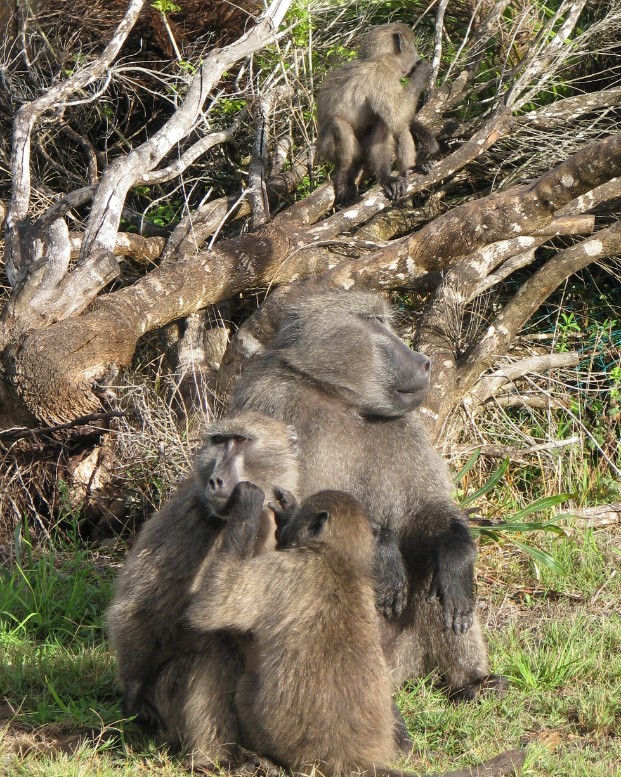
Young female baboon grooms mother as male sits nearby. The youngster was found shot in a residents ' garden a month later, one of the casualties of human intolerance.
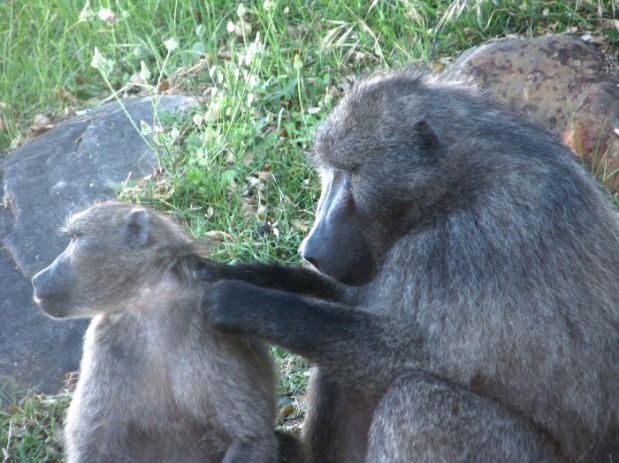
Adult male grooms female. Males have come under particular attention and some have been culled, while others have been eartagged, the first step in the culling process.
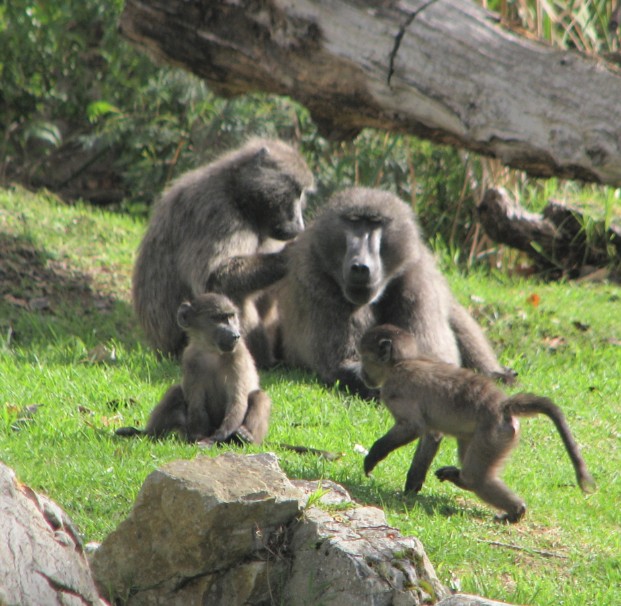
Female baboon grooms male. Males fight for dominance which gives preferential rights to food, females and grooming. Grooming removes parasites and is a form of social bonding. This male was found dead in November 2010.
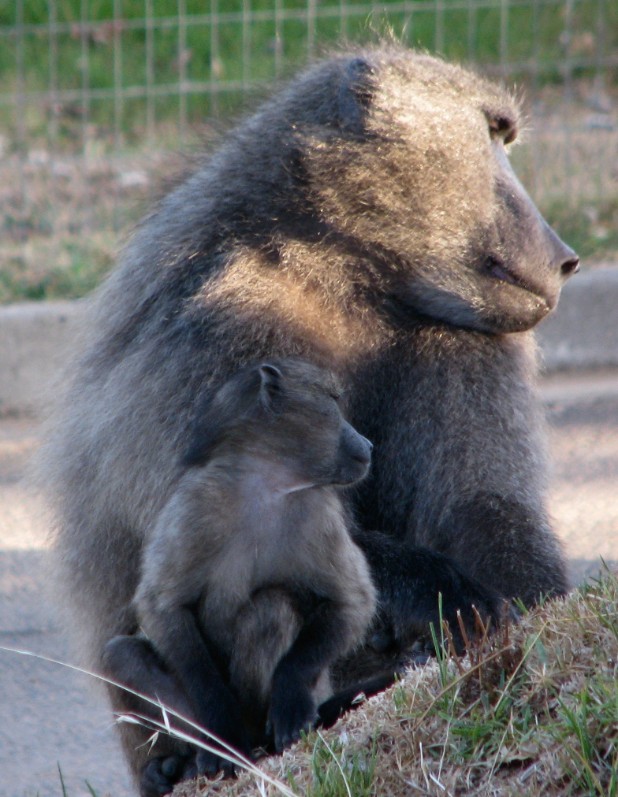
Adult male and juvenile. Male baboons are remarkably tolerant and are excellent fathers, highly protective of the young.
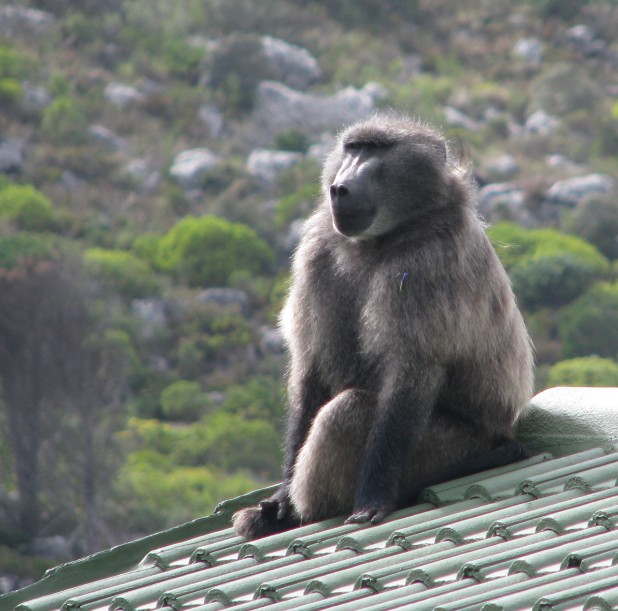
Adult male baboon sits on roof. In the Peninsula baboon home ranges may be intersected by urban areas. A baboon monitoring project employs men to herd them to the hills in an effort to reduce conflict between humans and baboons. Baboons are easily kept out of houses and bins by effective baboon-proofing, yet some residents refuse to do so and suffer raids,
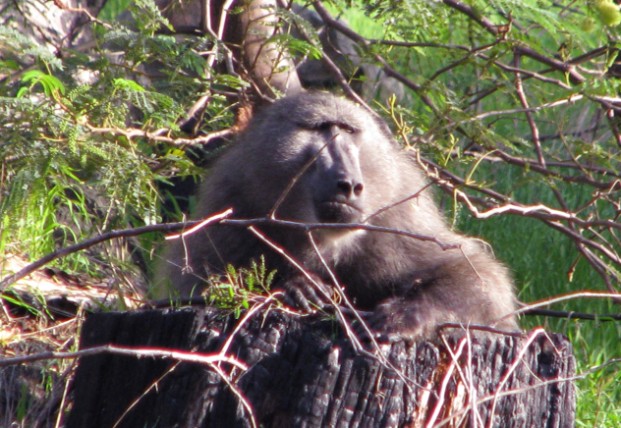
An older ex-Alpha male holds a stick. Controversy has also existed at the introduction of herding methods such as whips and bearbangers, considered as inhumane and unnecessary, especially given that the baboons were previously herded by monitors using shouts and whistles.
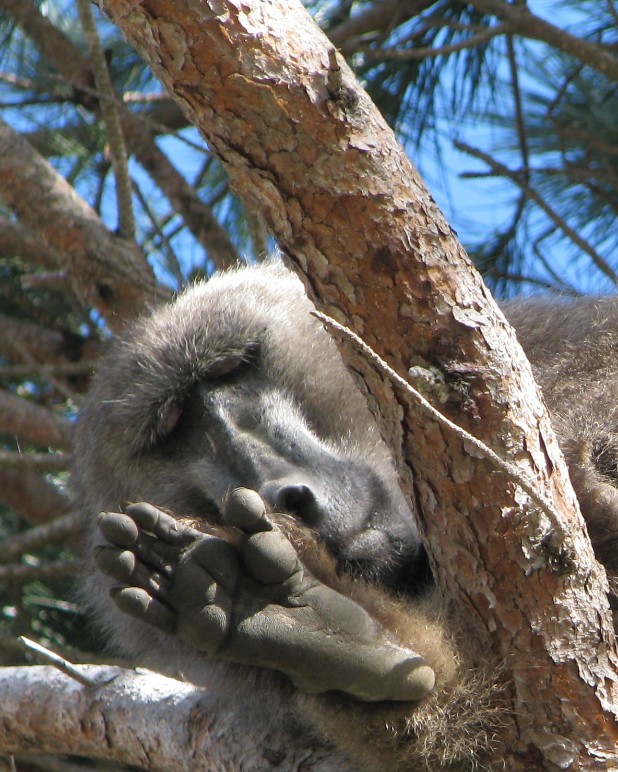
The ex-Alpha male naps in a tree. He lost his position in the strictly hierarchical system after being shot in the leg, resulting in a long term limp.
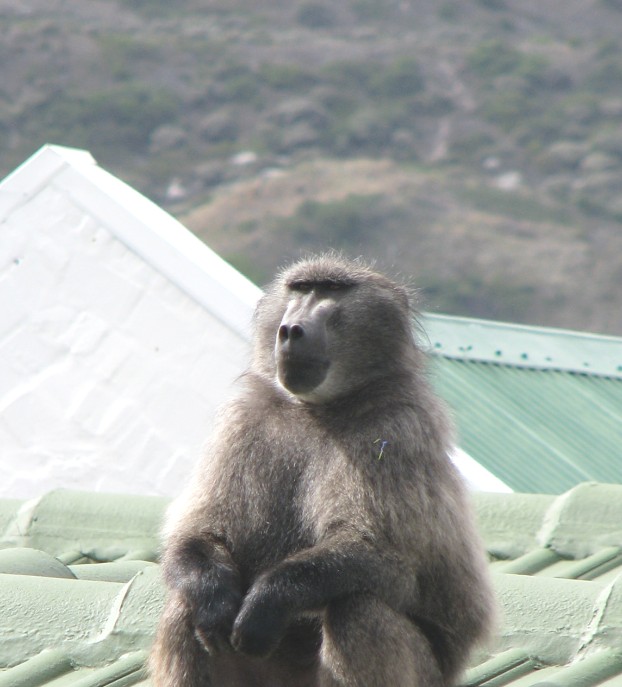
Adult male baboon sits on rooftop. While many Peninsula residents regard the baboons as part of a natural heritage to be preserved for future generations, some move into the areas with free-ranging baboons and demand their removal, often because they experience raids due to failure to baboon-proof.
Funding for monitors, acknowledged as the most effective method of managing the baboons has been a long term problem.
The City of Cape Town, is seeking a court ruling as to the responsibilities of the three statutory bodies including CapeNature and SANParks.
All rights reserved
All content copyright 2010
No portion may be reproduced in any way without written permission of site author.
